Common AV Mistakes at Events (and How to Avoid Them)
Let’s Be Honest: Most AV Problems Are Preventable
When AV goes wrong at a live event, it doesn’t just cause a small hiccup—it can completely derail the audience experience. As a production partner who’s worked behind the scenes on everything from multi-stage conferences to intimate galas, we’ve seen what happens when AV is treated as an afterthought.
Here are the most common AV mistakes we see—and how you can avoid them.
1. Looping In Your AV Team Too Late
One of the biggest pitfalls is bringing your AV partner into the planning process at the last minute.
Why it matters:
If your AV team isn’t involved early, decisions about the venue, schedule, or stage layout may conflict with your technical needs. That can lead to rushed fixes, added costs, or limitations you didn’t expect.
How to prevent it:
Involve your AV or video partner as soon as planning begins. They can review floor plans, evaluate power and audio needs, and flag issues before anything is locked in.
Pro Tip:
At JSB Video, we offer pre-event consultations to identify problems early—before they become expensive surprises.
2. Skipping a Full Tech Rehearsal
A quick soundcheck won’t cut it. You need a complete run-through.
Why it matters:
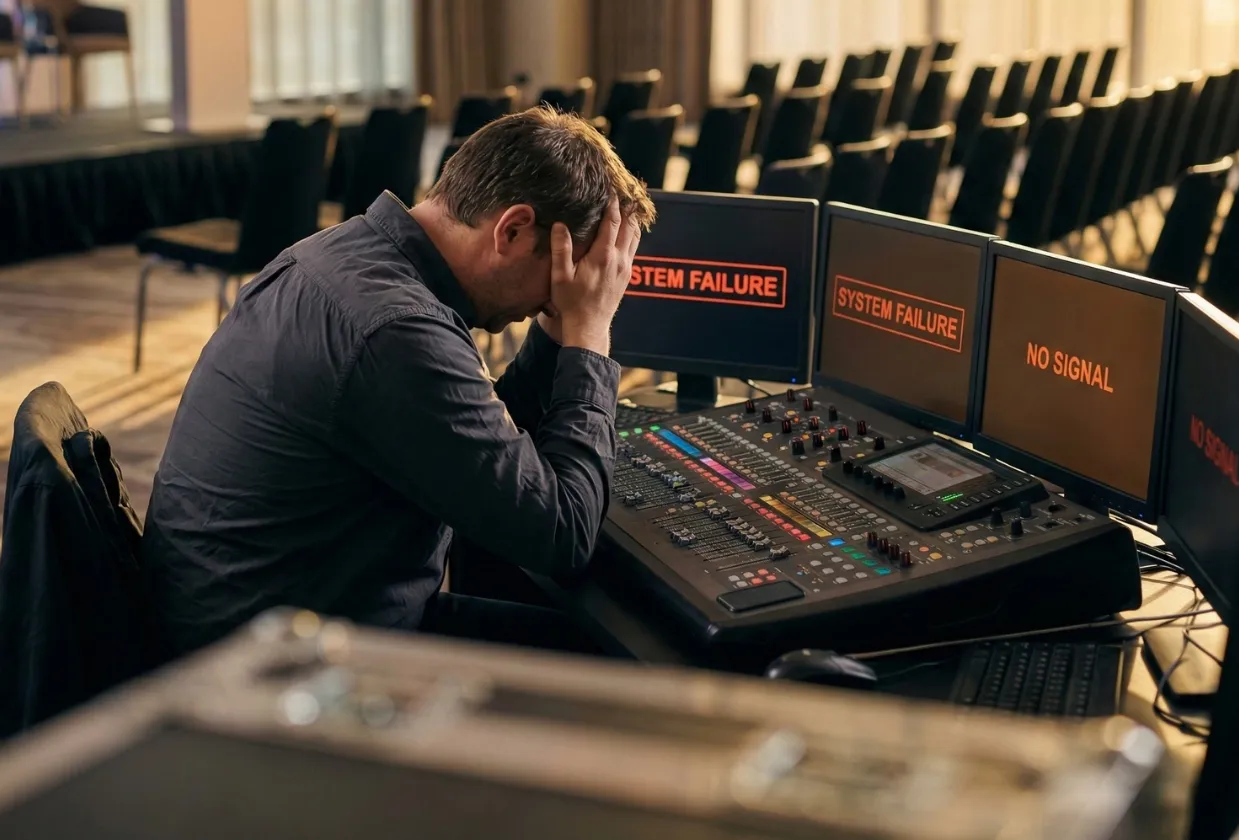
Cues get missed. Mics die. Presentations fail to load. Switching delays appear out of nowhere. A full rehearsal uncovers these issues before they hit the stage.
How to prevent it:
Schedule time for a complete AV rehearsal with presenters, playback, show cues, and transitions—run exactly as if it were live.
3. Assuming the Venue’s AV System Is “Good Enough”
Most venues offer in-house AV. That doesn’t mean it's the right fit.
Why it matters:
Venue-provided AV often relies on older projectors, limited audio routing, and minimal staffing. If something fails, you may not have the flexibility to fix it.
How to prevent it:
Ask questions:
- What equipment is included?
- Can you bring your own team?
- What’s the backup plan?
From experience:
We’ve had venues where the only XLR input was behind a locked panel—and no one had the key.
4. Forgetting the Audience Experience
Strong content can’t overcome bad AV.
Why it matters:
If the mics cut out or attendees can’t see the screen, they’ll remember the tech issues—not your message.
How to prevent it:
Walk the room like an attendee. Check sightlines, audio clarity, lighting, and livestream stability.

5. Not Capturing the Content for Later Use
You’re investing time, money, and effort—don’t leave empty-handed.
Why it matters:
A highlight video or recorded session can fuel your marketing for months. Repurposing event footage creates long-term value.
How to prevent it:
Plan in advance to record sessions, gather b-roll, and build a content strategy around your event.
At JSB Video, we help clients turn a single event day into months of usable content.
6. Miscommunication Between Teams
Most AV issues come down to unclear expectations.
Why it matters:
When planners, presenters, and AV teams aren’t aligned, critical details slip through the cracks.
How to prevent it:
Create a shared run-of-show and designate one point of contact to keep everyone coordinated.
7. Underestimating Setup and Strike Time
Setup always takes longer than people expect.
Why it matters:
Tight load-in windows, limited power, and elevator bottlenecks can push your entire timeline off track.
How to prevent it:
Do a venue walkthrough, confirm load-in routes, and build in buffer time.
Final Thoughts
Great AV is invisible. When everything works, no one notices. But when something fails, it steals the spotlight. At JSB Video, we partner with event planners, producers, and comms teams to ensure your AV doesn’t just work—it elevates your message.